
Introduction
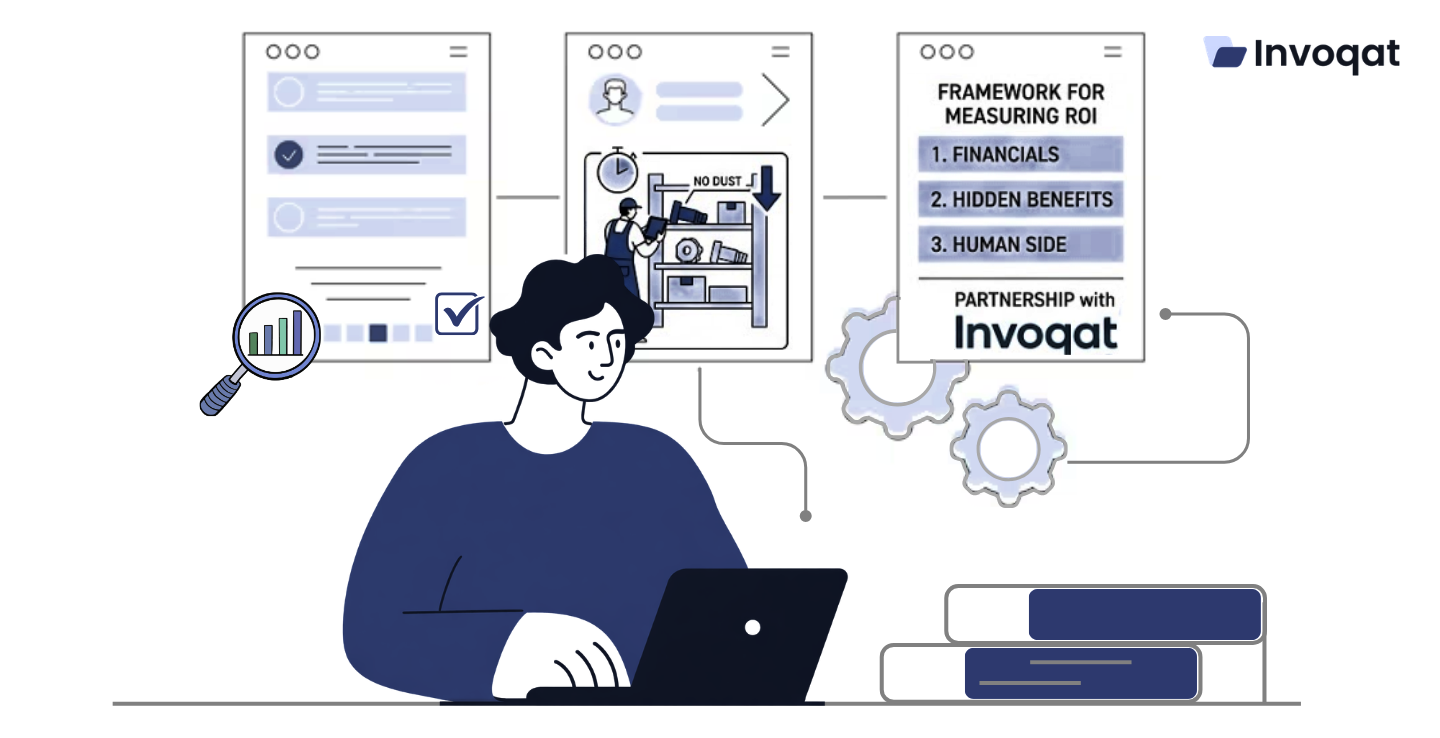
Understanding asset digitisation ROI helps organisations determine whether digital transformation investments truly improve operational performance.
Digital transformation is frequently discussed in boardrooms, strategy meetings, and industry conferences. Yet despite all the enthusiasm, many executives still ask a practical question:
What measurable value does digitisation actually deliver?
For organisations managing complex physical or informational assets, calculating the true ROI of asset digitisation becomes essential. Leaders cannot rely on promises or trends alone; they need clear financial evidence that transformation efforts improve operational performance.
Many companies approve digitisation initiatives because competitors are moving in that direction. However, months after implementation, leadership teams sometimes struggle to explain whether the investment reduced operational costs, improved asset reliability, or generated measurable business value.
The challenge is rarely the technology itself. Instead, the real difficulty lies in measuring value consistently before and after implementation.
Organisations such as Invoqat help enterprises digitise complex asset environments while linking every initiative to measurable outcomes. This alignment between technology adoption and operational value is what turns digitisation from a cost centre into a strategic advantage.
This guide explains how to calculate the true ROI of asset digitisation using a practical framework that organisations can apply across industries such as infrastructure, manufacturing, utilities, and enterprise asset management.
What ROI Actually Means in Asset Digitisation
Return on Investment (ROI) follows a simple formula:
ROI = (Net Benefit ÷ Total Investment) × 100
However, determining the net benefit of asset digitisation requires deeper analysis because benefits often appear across multiple operational areas.
Typical value drivers include:
- Reduced maintenance costs
- Lower asset downtime
- Faster regulatory reporting
- Reduced administrative workload
- Extended asset lifespan
- Improved capital planning decisions
Although these benefits are clear conceptually, organisations must convert them into quantifiable financial values to evaluate ROI properly.
Direct Cost Savings from Asset Digitisation
The most visible benefits often appear in operational efficiency improvements.
| Category | Before Digitisation | After Digitisation | Annual Savings Impact |
|---|---|---|---|
| Average Downtime Hours | 320 hrs/year | 180 hrs/year | Reduced labour and lost production |
| Maintenance Overtime | High | Moderate | Lower emergency response costs |
| Repeat Equipment Failures | Frequent | Rare | Fewer repair expenses |
Even modest improvements in downtime or maintenance efficiency can generate substantial financial returns when assets operate at scale.
A Practical Framework for Calculating ROI
To evaluate the true impact of asset digitisation, organisations should follow a structured process.
Step 1: Define the Asset Scope Clearly
Before calculating ROI, organisations must define exactly which assets and processes are being digitised.
Important considerations include:
- Which assets will be digitised
- Which departments will use the system
- Which workflows will change
- What systems will integrate with the digitisation platform
For example, digitising maintenance logs in a manufacturing facility produces a very different ROI profile compared to digitising municipal infrastructure inspection records.
Clarity at this stage prevents unrealistic expectations later.
Step 2: Establish Pre-Digitisation Metrics
Baseline metrics form the foundation of any ROI calculation.
Without accurate baseline measurements, improvements cannot be measured objectively.
| Metric | Before Digitisation | Measurement Method |
|---|---|---|
| Average maintenance resolution time | 6 hours | Technician logs |
| Document retrieval time | 25 minutes | Process observation |
| Annual unplanned downtime | 120 hours | Production reports |
| Compliance reporting preparation | 3 weeks | Management tracking |
These baseline numbers allow organisations to measure actual operational improvement after implementation.
Step 3: Identify Direct Financial Benefits
Direct financial benefits are usually the easiest to calculate.
Examples include:
- Reduction in labour hours
- Lower printing and storage costs
- Reduced downtime losses
- Fewer compliance penalties
Consider a simple example:
If document retrieval time decreases from 25 minutes to 5 minutes across 500 retrievals per month, the organisation saves 20 minutes per retrieval.
Over time, this improvement translates into significant productivity gains.
Step 4: Calculate Indirect and Strategic Benefits
Indirect benefits often create the largest long-term financial impact.
Strong asset digitisation ROI often appears through reduced downtime, lower maintenance costs, and improved asset lifecycle management.
These benefits include:
- Extended asset lifespan
- Improved capital expenditure planning
- Data-driven maintenance decisions
- Better operational transparency
Example Scenario
A regional water utility digitised inspection and maintenance records for 12,000 assets.
Initially, the goal was faster regulatory reporting. However, once maintenance data became structured and searchable, engineers identified a pattern.
Certain pump models were failing 18 months earlier than expected.
By adjusting maintenance schedules and renegotiating supplier agreements, the organisation avoided premature replacements and saved approximately $480,000 over three years.
These savings were not included in the original ROI forecast, yet they emerged naturally from improved asset visibility.
The Critical Question: Are You Measuring What Matters?
At this stage, organisations should pause and evaluate their measurement approach.
Calculating the true ROI of asset digitisation is not about proving that technology is beneficial. Instead, it is about determining whether your specific implementation produces measurable business value.
Key questions include:
- Are operational costs actually decreasing?
- Has asset reliability improved?
- Are capital planning decisions more accurate?
- Has operational risk decreased?
Technology dashboards may look impressive, but without measurable operational improvements, the financial value remains unclear.
Integrating Risk Reduction into ROI Calculations
Risk reduction rarely appears in traditional ROI calculations, yet it often represents a significant financial benefit.
Potential risk factors include:
- Regulatory penalties
- Safety incidents
- Insurance claims
- Operational downtime
- Reputation damage
Organisations can estimate expected risk cost using probability analysis.
For example:
If regulatory non-compliance penalties could reach $1 million annually with a 20% probability, the expected risk cost equals:
$200,000
If digitisation reduces that probability to 5%, expected risk drops to:
$50,000
The $150,000 difference becomes part of the ROI calculation.
Long-Term Benefits That Accumulate Over Time
Digitisation benefits often increase as asset data accumulates.
| Benefit | Time Frame | Operational Impact |
|---|---|---|
| Increased asset lifespan | Multi-year | Slower depreciation |
| Improved audit readiness | Continuous | Faster regulatory compliance |
| Stronger safety culture | Ongoing | Better visibility of risks |
These advantages may not appear immediately, but they significantly influence long-term operational performance.
Aligning Digitisation with Business Strategy
Asset digitisation should always support broader organisational objectives.
These may include:
- Expansion plans
- Regulatory compliance requirements
- Operational efficiency targets
- Sustainability initiatives
Companies like Invoqat emphasise aligning digitisation projects with enterprise strategy. When digital tools support business goals directly, technology adoption becomes a driver of operational resilience rather than another isolated system.
Common ROI Calculation Mistakes
Several mistakes frequently weaken asset digitisation ROI assessments.
Avoid the following pitfalls:
- Ignoring employee adoption rates
- Underestimating training requirements
- Overestimating early savings projections
- Failing to review assumptions annually
- Treating ROI as a one-time calculation
ROI evaluation should remain an ongoing process, not a single report created at project completion.
Conclusion
Calculating the true ROI of asset digitisation requires more than building impressive financial spreadsheets. It requires structured measurement, realistic baselines, and continuous monitoring of operational performance.
When organisations define clear metrics before implementation and track improvements consistently, digitisation becomes a disciplined investment rather than an abstract transformation initiative.
Companies that revisit ROI assumptions regularly often uncover additional benefits, especially in areas such as maintenance optimisation, lifecycle planning, and operational risk reduction.
Organisations like Invoqat demonstrate how structured asset digitisation, combined with measurable performance tracking, can transform asset-intensive environments into data-driven ecosystems.
Ultimately, the strongest returns emerge when digitisation remains anchored in financial accountability, operational clarity, and measurable business outcomes.
Frequently Asked Questions
Asset digitisation refers to converting physical asset records, maintenance logs, inspections, and operational data into digital systems so organizations can track, manage, and analyze assets more efficiently.
Companies calculate ROI using the formula ROI = (Net Benefit ÷ Total Investment) × 100, where benefits include reduced downtime, lower maintenance costs, improved asset lifespan, and better operational efficiency.
The most common financial gains include reduced maintenance costs, lower operational downtime, faster compliance reporting, improved asset utilization, and better long-term capital planning.
Invoqat helps organizations digitise asset environments while linking every implementation to measurable operational outcomes, enabling businesses to track performance improvements and clearly demonstrate return on investment.
Most organizations begin seeing measurable improvements within 6–12 months, especially through reduced maintenance downtime, improved reporting efficiency, and better asset management visibility.
