
Introduction: When Growth Creates Complexity
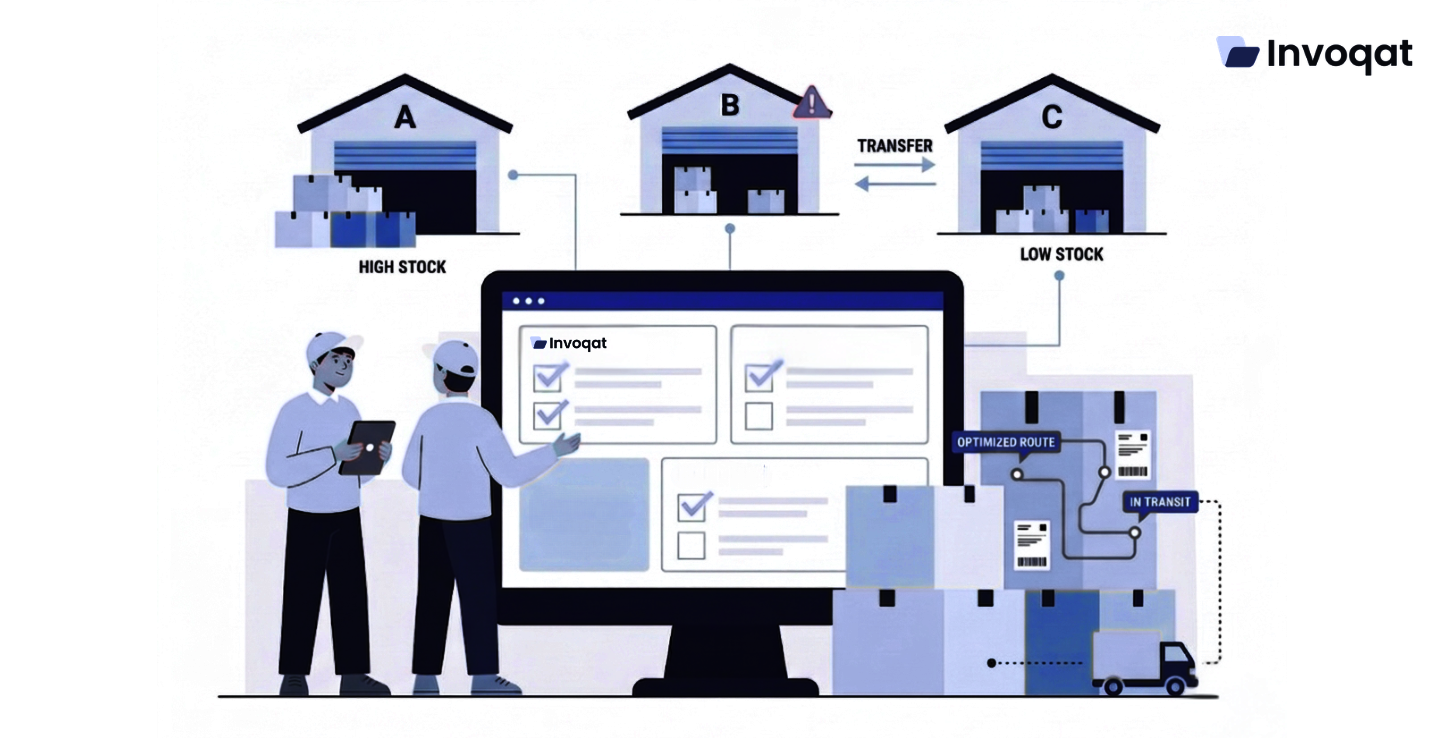
Managing inventory across multiple warehouses often sounds like a sign of progress. More locations mean faster delivery, better reach, and the ability to handle growing demand.
However, as operations expand, complexity tends to grow just as quickly.
One warehouse runs out of stock while another holds excess inventory. Meanwhile, teams begin calling each other for updates, and orders start getting delayed. What initially seemed like an efficient system suddenly feels difficult to control.
This is exactly why multi-warehouse inventory management deserves closer attention. It is not only about storing products in different locations it is about maintaining visibility, coordination, and consistency across all of them.
When handled properly, it reduces confusion, improves accuracy, and allows teams to operate with confidence.
Table of Contents
ToggleSingle vs Multi-Warehouse Complexity
| Factor | Single Warehouse | Multi-Warehouse |
|---|---|---|
| Inventory Visibility | Easy to track | Requires centralized system |
| Stock Transfers | Minimal | Frequent and complex |
| Order Fulfilment | Straightforward | Location-based decisions |
| Risk of Errors | Low | Higher without coordination |
| Planning Effort | Basic | Advanced forecasting |
What is Multi-Warehouse Inventory Management
Multi-warehouse inventory management refers to tracking, controlling, and optimizing stock across multiple storage locations.
Instead of managing inventory from a single facility, businesses operate across different cities, regions, or even countries. While this approach improves distribution, it also introduces operational challenges that require structured systems.
Why Businesses Use Multiple Warehouses
There are several practical reasons organizations expand into multiple locations:
- To reduce delivery times
- To stay closer to customers
- To manage higher demand
- To lower shipping costs
Therefore, multi-warehouse setups are often necessary but they must be managed carefully.
Key Challenges in Multi-Warehouse Inventory Management
Although multi-location operations offer advantages, they also introduce challenges that directly impact efficiency.
Lack of Real-Time Visibility
Without real-time data, teams rely on outdated reports. As a result, decisions about stock levels or transfers may not reflect current conditions.
Inventory Imbalance Across Locations
In many cases, one warehouse holds excess stock while another faces shortages. Consequently, businesses spend more time transferring goods instead of fulfilling orders efficiently.
Order Fulfilment Delays
When systems lack coordination, orders may be assigned to the wrong warehouse. This leads to longer delivery times and increased shipping costs.
Data Silos and Communication Gaps
If warehouses operate on separate systems, information becomes inconsistent. Therefore, teams often spend extra time verifying stock levels, which slows down operations.
Higher Operational Costs
Managing multiple locations requires more resources. Without structured processes, these costs increase without delivering proportional benefits.
Common Challenges and Their Impact
| Challenge | Business Impact |
|---|---|
| Poor Visibility | Incorrect stock decisions |
| Inventory Imbalance | Increased transfers |
| Delayed Orders | Customer dissatisfaction |
| Data Silos | Miscommunication |
| High Costs | Reduced profitability |
Practical Solutions That Actually Work
Fortunately, these challenges can be addressed with the right strategies and tools.
Use a Centralized Inventory System
A centralized platform connects all warehouses into one system. As a result, every team accesses the same data, improving coordination and reducing confusion.
Enable Real-Time Tracking
Technologies such as barcode scanning, RFID, and integrated software allow businesses to track inventory instantly. Therefore, stock data remains accurate at all times.
Automate Order Allocation
Instead of manual decision-making, automated systems assign orders based on:
- Stock availability
- Warehouse location
- Delivery efficiency
This approach reduces delays and improves consistency.
Balance Inventory with Demand Forecasting
By analyzing historical data, businesses can predict demand more accurately. Consequently, inventory can be distributed more effectively across locations.
Standardize Processes Across Warehouses
Consistency is essential. Standard procedures for receiving, storing, and dispatching inventory help reduce errors and simplify operations.
Improve Communication Between Teams
Clear communication, supported by shared systems, ensures that all teams remain aligned. As a result, misunderstandings and delays decrease.
The Role of Technology in Multi-Warehouse Management
At this stage, technology becomes more than helpful it becomes essential.
Modern inventory systems provide:
- Real-time dashboards
- Automated alerts
- Integrated warehouse management
- Predictive analytics
Interestingly, once teams trust these systems, behavior changes. Instead of calling for updates, they simply check dashboards. This shift saves time and reduces operational stress.
Solutions like Invoqat focus on creating these connected environments, helping organizations manage multiple warehouses without losing control.
Before vs After Optimization
| Metric | Before Optimization | After Optimization |
|---|---|---|
| Stock Accuracy | 70% | 95% |
| Order Fulfilment Time | 3–5 days | 1–2 days |
| Manual Coordination | High | Minimal |
| Inventory Imbalance | Frequent | Rare |
Key Benefits of Optimized Multi-Warehouse Systems
Once systems are aligned, improvements become noticeable:
- Faster order fulfilment
- Better inventory utilization
- Reduced operational costs
- Improved customer satisfaction
- Stronger decision-making
Although these changes may seem gradual, they significantly improve overall efficiency.
Choosing the Right Technology Partner
Technology alone does not guarantee success. Implementation plays a critical role.
Organizations should look for partners who:
- Understand operational challenges
- Provide scalable solutions
- Offer ongoing support
- Focus on usability
Providers like Invoqat bring value by designing systems that are practical and easy for teams to adopt.
Final Thoughts
Managing multiple warehouses is not simply about handling more locations. Instead, it is about maintaining control across systems that operate simultaneously.
When processes remain disconnected, small inefficiencies multiply quickly. On the other hand, when systems are aligned, operations become predictable and manageable.
Companies like Invoqat contribute to this transformation by improving visibility, connecting data, and reducing reliance on manual coordination.
If you are evaluating your current setup, consider this simple question:
Do all your teams see the same information at the same time?
If the answer is no, that is where improvement should begin.
Ultimately, effective multi-warehouse inventory management is not about controlling complexity it is about creating consistency across operations.
Frequently Asked Questions
It is the process of managing inventory across multiple storage locations while maintaining accuracy and coordination.
Because it involves coordinating stock, orders, and data across different locations, which increases complexity.
By using centralized systems and real-time tracking tools that provide accurate, up-to-date data.
Yes. Automation improves order allocation, reduces manual work, and increases efficiency.
Technology enables real-time tracking, better forecasting, and improved coordination across warehouses.
