
Introduction: When the Field Starts Talking Back
Most field service managers know the feeling. Phones ringing, technicians driving between job sites, customers asking when help will arrive, and somewhere in the middle of all that activity sits a spreadsheet that was last updated hours ago.
That kind of information is rarely helpful.
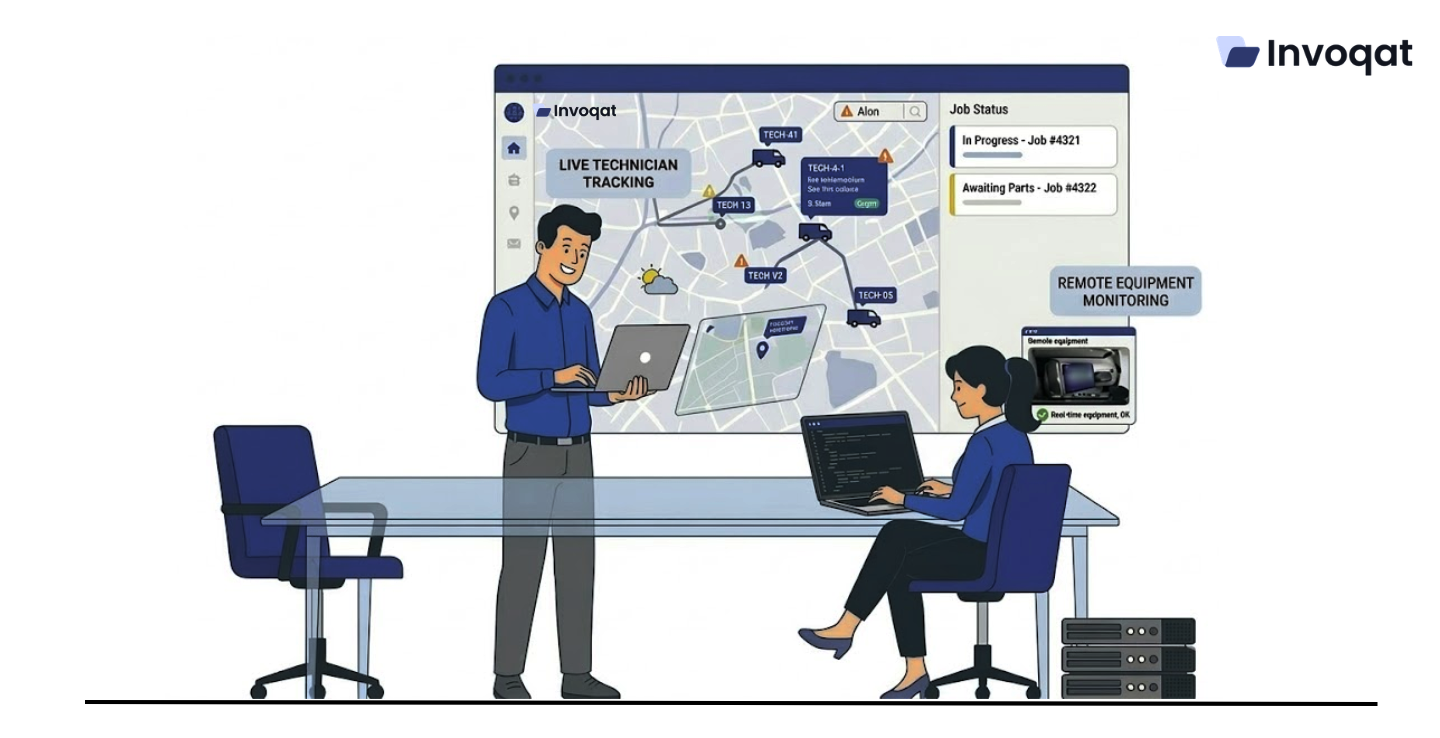
This is where real-time field service data begins to transform how operations function. Instead of waiting for updates after technicians finish their jobs, managers and dispatch teams can see what is happening while the work is actually taking place. It may seem like a small improvement at first, but in reality it changes how decisions are made throughout the day.
Platforms such as the Invoqat field service solution capture technician updates, service activity, and equipment interactions as they happen in the field. This information becomes instantly visible to operations teams, allowing them to respond quickly when circumstances change.
The outcome is straightforward: decisions happen faster, and they tend to be more accurate.
Interestingly, once organizations begin seeing their operations clearly, they rely far less on assumptions and far more on real data.
How Operational Decisions Change with Real-Time Data
| Operational Situation | Without Real-Time Data | With Real-Time Data |
|---|---|---|
| Technician scheduling | Based on estimates | Based on live updates |
| Service delays | Discovered hours later | Identified instantly |
| Equipment problems | Addressed after failure | Detected earlier |
| Workforce planning | Slow adjustments | Immediate decisions |
Understanding Real-Time Field Service Data
In simple terms, real-time field service data refers to operational information captured at the exact moment field work occurs.
Examples include:
- Technician job updates
- Equipment inspection records
- Service completion times
- Task progress notifications
- Asset interaction logs
All of this information feeds into field service analytics, helping operations teams identify patterns in service activity and operational performance.
Consider this simple thought: if technicians complete fifty service jobs in a single day, how many operational insights might exist within that data?
The answer is often more than organizations expect.
Visibility Changes the Way Operations Work
A surprising number of operational challenges begin with limited visibility.
Managers often need answers to questions such as:
- Which technician is closest to the next job location?
- Which service visit might run late today?
- Which equipment fails more frequently than expected?
Without proper operations visibility software, those answers typically arrive too late to influence decisions.
However, with real-time operational data, managers can observe technician activity and service progress as it happens. Decisions begin to rely on actual operational events rather than delayed reports.
This shift from assumption to observation significantly improves operational control.
Why Field Service Analytics Matters
Collecting operational data is valuable, but interpreting that data is where real improvement begins.
Field service analytics transforms raw operational information into meaningful service data insights.
For example, analytics can reveal:
- The average repair time for specific equipment types
- Technicians who consistently resolve issues faster than expected
- Locations where service requests occur frequently
- Assets that repeatedly require maintenance
Sometimes the insights challenge existing assumptions. A technician who appears slower might actually handle the most technically demanding service tasks.
Data often reveals patterns that manual observation misses.
Responding Faster When Problems Appear
Field service operations rarely follow a perfect schedule.
Technicians encounter traffic delays, equipment failures, or urgent customer requests. Without real-time updates, operations teams often react too slowly.
By the time the issue becomes visible, the disruption has already grown.
With real-time field service data, organizations can respond immediately by:
- Reassigning technicians
- Adjusting service routes
- Prioritizing urgent repair requests
- Informing customers about schedule changes
Small adjustments made early in the day often prevent larger disruptions later.
Common Sources of Field Service Data
| Data Source | Operational Value |
|---|---|
| Technician mobile updates | Track job progress |
| Equipment interaction logs | Monitor maintenance needs |
| Work order completion records | Evaluate technician productivity |
| Service response times | Improve customer satisfaction |
| Asset usage data | Identify equipment performance trends |
How Real-Time Data Supports Technicians
Technicians frequently spend valuable time coordinating work instead of performing service tasks.
They might wait for instructions, call dispatch for updates, or search for equipment history. These interruptions slow the entire workflow.
Real-time operational systems reduce these delays by providing technicians with immediate access to information such as:
- New job assignments
- Task instructions
- Asset service history
- Schedule updates
With clear information available instantly, technicians can focus more on solving technical problems rather than managing logistics.
For most field teams, clarity reduces stress during busy workdays.
Equipment Maintenance Becomes More Predictable
Many field service organizations manage hundreds or thousands of physical assets, including HVAC systems, elevators, industrial equipment, or building infrastructure.
When maintenance planning depends on manual records, unexpected equipment failures become more common.
Real-time operational data improves this process.
Continuous monitoring helps organizations identify:
- Assets approaching maintenance deadlines
- Equipment showing early signs of failure
- Locations with increased service demand
These service data insights allow organizations to move from reactive maintenance toward proactive asset management.
A Typical Moment from Field Operations
Imagine a service company responsible for maintaining office buildings across a large city.
One morning, two technicians unexpectedly call in sick. The day’s service schedule immediately becomes complicated.
Without operational visibility, dispatch teams might spend hours reorganizing the remaining service visits.
With real-time field service data, managers can instantly see technician availability, job priorities, and service locations. Within minutes, they can redistribute assignments and adjust schedules.
Customers continue receiving service on time, and the disruption remains minimal.
Sometimes operational success simply depends on seeing the full picture clearly.
Operational Improvements from Real-Time Service Data
| Area of Improvement | Operational Impact |
|---|---|
| Technician scheduling | Faster dispatch decisions |
| Equipment maintenance | Reduced downtime |
| Workforce management | Improved productivity insights |
| Service planning | Smarter operational adjustments |
| Customer communication | More accurate updates |
How Invoqat Supports Operational Visibility
The Invoqat field service platform focuses on capturing service activity directly from the field as work occurs.
Technician actions, equipment interactions, and work order progress automatically generate operational data. This information becomes visible to operations teams in real time.
Organizations can then analyze performance trends, monitor technician productivity, and understand how field service operations function throughout the day.
The technology itself remains simple in concept, but the clarity it provides significantly improves decision-making.
Conclusion
Field service operations move quickly, and delayed information rarely helps managers solve problems effectively.
That is why real-time field service data plays such a critical role in operational decision-making. It allows organizations to monitor technician activity, track equipment performance, and observe service progress as work occurs.
When this information feeds into field service analytics, businesses gain valuable insights that support smarter planning and faster operational responses.
Solutions like the Invoqat field service platform help organizations capture service events in real time while providing visibility across technicians, assets, and work orders.
Once operations become visible, better decisions tend to follow naturally.
Sometimes the greatest operational advantage is simply knowing what is happening right now.
Frequently Asked Questions
Real-time field service data refers to operational information captured instantly during field activities, including technician updates, equipment interactions, and job progress.
Field service analytics helps organizations analyze service patterns, evaluate technician productivity, and identify operational improvements based on real data.
Operations visibility software provides managers with a live view of technician activity, service progress, and equipment performance across field operations.
Yes. Accurate operational data allows service teams to schedule technicians efficiently, provide better updates, and reduce service delays.
Many modern platforms simplify the process by combining technician mobile applications, analytics dashboards, and operational monitoring into a single integrated system.
