
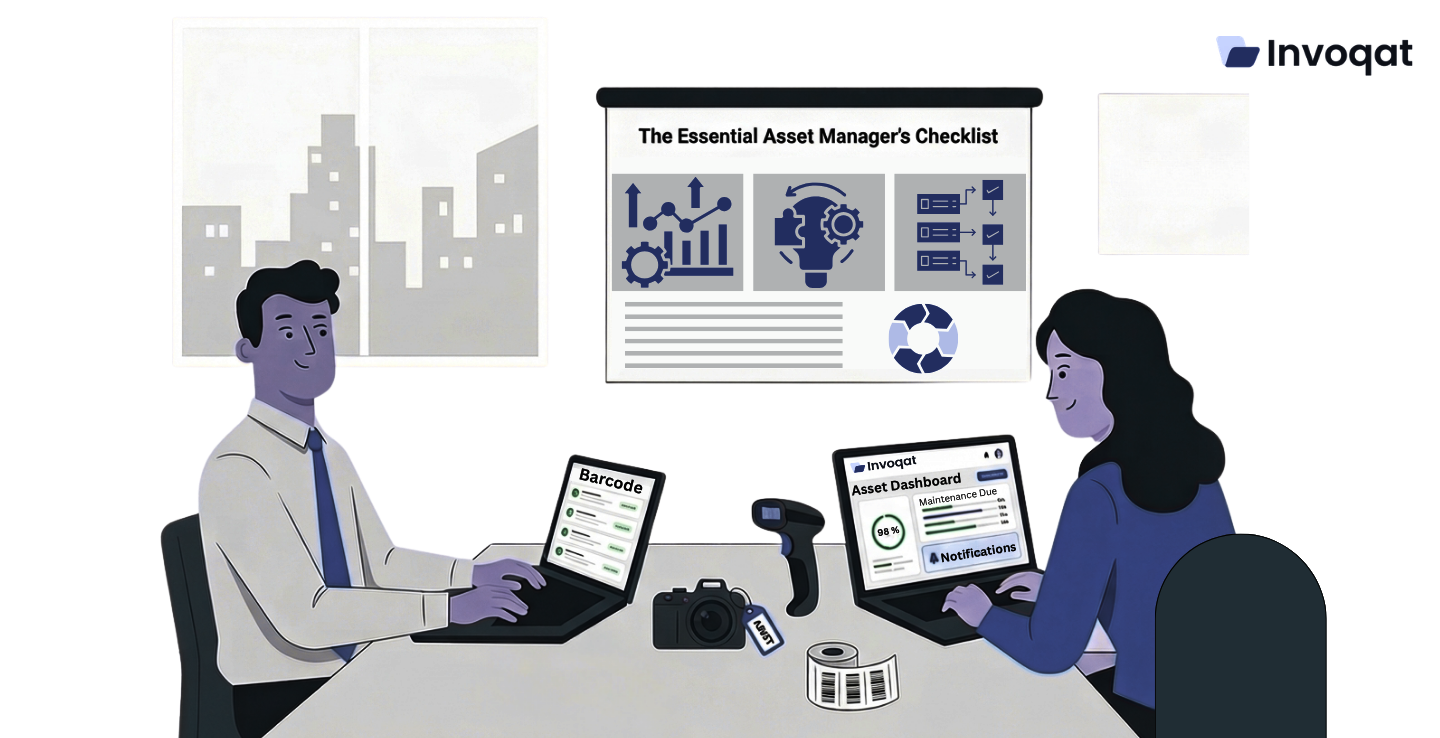
Introduction: When Small Gaps Start to Add Up
Every business owns assets. That part is simple. However, what often goes unnoticed is how little visibility teams actually have over them.
At first, the issues seem minor. A laptop gets reassigned without an update. A subscription renews quietly. A service date passes because a reminder was missed. Individually, none of these feel urgent.
Yet over time, those small gaps begin to accumulate.
Eventually, someone asks a straightforward question:
Where is this asset? Who is using it? When was it last maintained?
Suddenly, the answers are not so easy.
This is exactly where The Essential Asset Manager’s Checklist: What to Track and Why It Matters becomes valuable. Rather than adding complexity, it introduces structure and clarity.
Platforms like Invoqat approach this challenge practically. Instead of overwhelming teams, they simplify how businesses track and manage assets in daily operations.
Core Asset Categories and Their Role
| Asset Category | Examples | Why It Matters |
|---|---|---|
| Physical Assets | Equipment, vehicles, furniture | Keeps operations running smoothly |
| Digital Assets | Software, licenses | Controls recurring costs |
| IT Assets | Laptops, servers | Supports productivity |
| Financial Assets | Accounts, investments | Provides financial clarity |
| Intangible Assets | Contracts, IP | Protects business value |
What Asset Management Really Means
Although asset management often sounds formal, in practice, it is more about awareness than control.
It involves:
- Knowing what assets exist
- Understanding where they are located
- Tracking how they are used
- Evaluating whether they still add value
Interestingly, many businesses do not actively track all their assets not because they do not care, but because tracking feels like an extra task.
However, that “extra task” often turns into a long-term problem.
This is where tools like Invoqat help. They integrate tracking into daily workflows, making updates feel natural rather than forced.
Why Asset Tracking Matters More Than It Seems
At first glance, asset tracking may appear administrative. In reality, its impact extends far beyond that.
Without proper tracking:
- Costs increase unexpectedly
- Equipment gets replaced too early
- Teams waste time searching for assets
On the other hand, structured tracking:
- Improves visibility
- Reduces waste
- Supports better decision-making
Therefore, a simple checklist can prevent many of these issues before they grow.
The Essential Asset Manager’s Checklist
While no system is perfect, certain tracking elements consistently appear in effective asset management.
1. Asset Identification
To begin with, every asset must have a clear identity.
- Serial numbers
- Asset tags
- Purchase records
Without these, tracking quickly becomes unreliable.
2. Location Tracking
Assets move frequently. Offices expand. Teams shift.
Consequently, location data becomes outdated quickly unless it is maintained.
Keeping this updated:
- Reduces confusion
- Speeds up retrieval
- Improves accountability
3. Usage and Allocation
Next, it is important to understand who is using each asset.
This helps identify:
- Underutilized resources
- Overused equipment
- Allocation imbalances
4. Maintenance Planning
Although maintenance may not feel urgent, it becomes critical over time.
A structured plan should include:
- Service schedules
- Repair history
- Vendor details
As a result, businesses move from reactive fixes to proactive maintenance.
5. Depreciation Awareness
Assets naturally lose value. However, tracking depreciation helps businesses decide:
- Whether to repair
- Whether to replace
- When to invest
6. Compliance and Documentation
In many cases, assets require certifications or licenses.
Missing documentation can lead to:
- Audit complications
- Compliance risks
Therefore, keeping records centralized is essential.
7. Lifecycle Tracking
Finally, every asset follows a lifecycle:
- Purchase
- Usage
- Maintenance
- Replacement
Tracking this journey supports better long-term planning.
Key Tracking Elements
| Tracking Area | Key Information | Why It Helps |
|---|---|---|
| Identification | Asset ID, serial number | Ensures accuracy |
| Location | Site, department | Prevents confusion |
| Usage | Assigned user | Improves allocation |
| Maintenance | Service logs | Extends lifespan |
| Compliance | Certificates | Avoids risks |
The Hidden Costs of Poor Asset Management
Interestingly, asset management issues rarely appear as one major problem.
Instead, they show up as:
- Duplicate purchases
- Missed renewals
- Equipment downtime
While each issue seems minor, together they create operational pressure.
This is why early visibility matters.
Where Technology Makes a Difference
Initially, spreadsheets may seem sufficient. However, as businesses grow, manual tracking becomes harder to maintain.
Eventually:
- Data becomes outdated
- Updates are missed
- Visibility declines
At this stage, digital solutions become necessary.
Platforms like Invoqat centralize asset data, making it easier to:
- Update records
- Track movement
- Make informed decisions
Asset Management in the UAE Context
Companies in the UAE often operate in fast-growing environments with strict compliance requirements.
Because of this:
- Asset volumes increase rapidly
- Documentation must remain accurate
- Audits require clear records
Therefore, a structured checklist becomes essential for maintaining control.
Common Mistakes to Avoid
Even experienced teams encounter recurring challenges:
- Relying only on spreadsheets
- Delaying updates
- Ignoring smaller assets
- Skipping regular reviews
Although these may seem minor, they create long-term blind spots.
Final Asset Management Overview
| Focus Area | Risk if Ignored | Benefit When Managed |
|---|---|---|
| Tracking | Lost assets | Full visibility |
| Maintenance | Equipment failure | Reliable performance |
| Compliance | Legal issues | Smooth audits |
| Lifecycle | Poor planning | Better decisions |
| Usage | Inefficiency | Balanced allocation |
A Shift Worth Noticing
Recently, businesses have started moving away from reactive asset management.
Instead, they focus on:
- Visibility
- Planning
- Data-driven decisions
This shift highlights an important truth: asset management is no longer just operational—it is strategic.
Where Invoqat Fits In
Invoqat focuses on making asset tracking practical.
Rather than introducing complexity, it:
- Centralizes information
- Simplifies updates
- Supports daily workflows
As a result, teams spend less time managing assets and more time using them effectively.
Conclusion: Clarity Creates Control
Asset management does not need to feel overwhelming.
At its core, it is about clarity:
- Knowing what exists
- Understanding how it is used
- Planning what comes next
A structured checklist provides stability as businesses grow.
With solutions like Invoqat, this process becomes easier, more reliable, and far less stressful.
And once clarity is achieved, decisions naturally become more confident.
Frequently Asked Questions
Accurate tracking is the foundation. Everything else depends on it.
Ideally, quarterly reviews help maintain accurate records.
Yes. In fact, smaller businesses often notice improvements more quickly.
It helps determine when to maintain, replace, or retire assets.
