
Introduction
Leaders make decisions every day using data. However, the challenge is that much of that data is slightly outdated by the time it reaches them. Reports take time to compile, dashboards refresh slowly, and teams sometimes rely on numbers that reflect yesterday’s reality rather than what is happening now.
As a result, decision-making often becomes cautious. Leaders pause, ask for confirmation, and sometimes delay actions because they are unsure whether the information is current.
This is where real-time asset intelligence becomes valuable. It is not merely a technical upgrade. Instead, it gives organizations immediate visibility into what their assets are doing right now. When data arrives instantly, leaders can act with greater clarity and confidence.
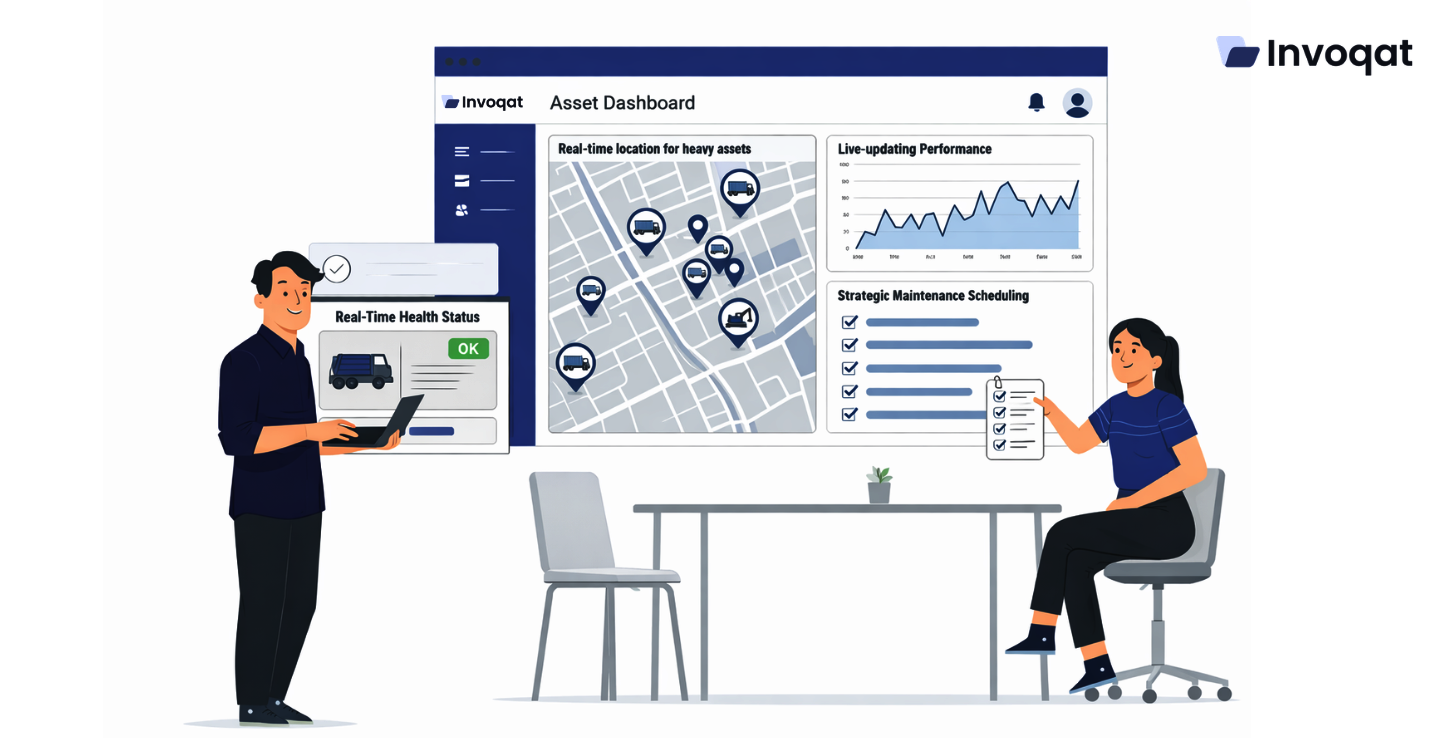
Companies such as Invoqat help organizations implement practical real-time asset intelligence systems. These solutions allow teams to monitor equipment conditions, operational activity, and asset health continuously. Consequently, decisions become easier to justify and discussions across teams become more focused.
In this guide, we explore how real-time asset intelligence improves strategic decision-making and why accurate, timely information plays such an important role in modern operations.
Real-Time Data vs Traditional Data
| Aspect | Real-Time Data | Traditional Data |
|---|---|---|
| Accuracy | Current and continuously updated | Often outdated |
| Response Time | Immediate | Delayed |
| Confidence Level | High | Lower |
| Risk Exposure | Reduced | Increased |
The difference between these two approaches affects how quickly leaders can respond to operational changes.
What Real-Time Asset Intelligence Means
Real-time asset intelligence refers to the ability to monitor assets continuously and understand their condition or performance as events occur.
For example, organizations can track:
- Equipment temperature fluctuations
- Machine performance levels
- Vehicle location and route changes
- Production system activity
- Energy consumption patterns
Without this capability, companies rely on delayed reporting processes. Someone records the data, another team processes it, and then the results circulate internally. By the time the report reaches decision-makers, the situation may already have changed.
Real-time visibility eliminates this delay. Instead of reacting to past events, leaders respond to current conditions.
Strategic Decision-Making with Real-Time Data
When leaders rely on real-time data, strategic conversations change significantly.
Decisions become faster because the information reflects what is actually happening. Leaders no longer hesitate or request repeated confirmations. Instead, they trust the numbers presented to them.
As a result:
- Meetings become more focused
- Decisions feel more grounded
- Risks are identified earlier
Delayed data often creates confusion. Real-time information, on the other hand, encourages clarity and calm decision-making.
Strategic Benefits of Real-Time Asset Intelligence
| Benefit | Description |
|---|---|
| Faster Action | Leaders respond as events unfold |
| Lower Costs | Problems are detected before they escalate |
| Clearer Teams | Everyone works from the same information |
| Better Planning | Long-term strategies become more accurate |
These improvements strengthen operational performance and long-term planning.
Key Benefits for Organizations
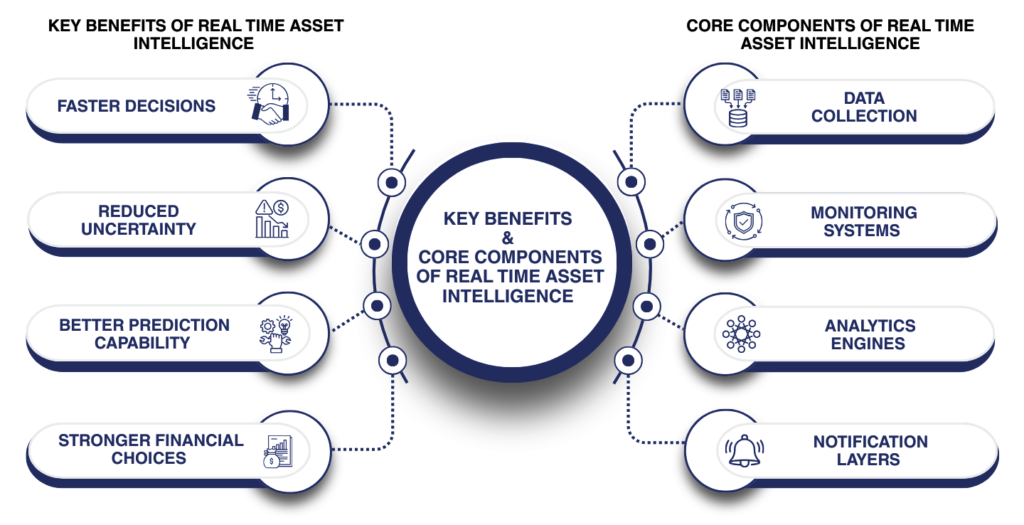
Faster Decision-Making
Real-time visibility allows leaders to act quickly. Instead of waiting for updated reports, they respond immediately when operational changes occur.
Reduced Uncertainty
Teams no longer rely on guesswork. Accurate data removes confusion and helps departments align around the same facts.
Improved Predictive Insights
When trends appear as they develop, organizations identify patterns sooner. This supports better forecasting and proactive maintenance planning.
Stronger Financial Decisions
Early problem detection prevents small operational issues from becoming costly disruptions. Consequently, organizations protect profitability.
Core Components of Real-Time Asset Intelligence
Real-time asset intelligence systems typically include several interconnected elements.
Data Collection
Sensors and connected devices gather operational information continuously. Because of this automation, manual reporting becomes unnecessary.
Monitoring Platforms
Dashboards display current asset performance, enabling teams to understand operational conditions instantly.
Analytics Engines
Advanced analytics convert raw data into useful insights, highlighting trends, anomalies, and performance patterns.
Notification Systems
Alerts notify the right people at the right time when thresholds or unusual conditions appear.
How Real-Time Asset Intelligence Enhances Strategy
Strategic planning becomes easier when leaders understand asset performance at any moment.
For example:
- Maintenance teams can predict equipment servicing needs instead of reacting to failures.
- Finance departments gain accurate cost insights linked to operational activity.
- Operations managers coordinate resources more effectively.
Over time, organizations move from reactive management to proactive strategy.
Meetings become more productive because teams discuss facts rather than assumptions.
Asset Intelligence Maturity Levels
| Level | Description |
|---|---|
| Basic | Manual reporting and spreadsheets |
| Intermediate | Automated system logs |
| Advanced | Real-time monitoring dashboards |
| Optimized | Predictive analytics and automated insights |
Organizations typically progress through these stages as their asset management systems evolve.
Challenges Without Real-Time Asset Data
Companies operating without real-time visibility often face recurring operational issues.
Examples include:
- Unexpected equipment failures
- Delivery delays
- Conflicting operational reports
- Budget overruns caused by hidden inefficiencies
These problems rarely appear dramatic initially. Instead, they accumulate gradually until operations become difficult to manage.
Without real-time asset intelligence, leaders spend more time reacting to problems rather than planning improvements.
Why Organizations Choose Invoqat
Many organizations choose Invoqat because their solutions focus on practical usability rather than overwhelming complexity.
Their systems help companies:
- Monitor assets in real time
- Track equipment health continuously
- Receive alerts before issues escalate
- Understand operational performance clearly
By simplifying real-time asset intelligence, Invoqat helps teams focus on decisions rather than data interpretation.
Conclusion
Real-time asset intelligence transforms how organizations manage operations and make strategic decisions.
When leaders have access to accurate information instantly:
- Decisions become faster
- Operational risks decrease
- Teams align around reliable data
Instead of relying on outdated reports, organizations gain a clear view of what is happening right now.
Companies such as Invoqat play an important role in enabling this shift by providing tools that deliver real-time visibility into asset performance.
As businesses across the UAE and globally adopt digital transformation strategies, real-time data is becoming an essential foundation for confident decision-making.
Frequently Asked Questions
Real-time asset intelligence is the ability to monitor assets continuously and access live performance data, allowing organizations to make immediate and informed decisions.
Because the information reflects current conditions, leaders can respond faster, reduce risks, and plan more accurately.
Industries such as manufacturing, logistics, utilities, construction, and transportation benefit greatly from real-time monitoring systems.
Invoqat provides solutions that monitor equipment performance, analyze operational data, and generate alerts when unusual conditions appear, helping organizations maintain operational clarity.
Modern asset intelligence platforms integrate with existing systems and IoT devices, making implementation easier than many organizations expect.
