
When Service Operations Feel Harder Than They Should
Service challenges rarely appear as major failures. Instead, they show up as small inefficiencies that build over time. For example, a technician may arrive without full job details. Similarly, equipment might be repaired, yet records remain incomplete. As a result, customers call again not because the issue was complex, but because the process lacked coordination.
This is exactly why integrated field service and asset management has become essential. Rather than treating service and asset data separately, businesses can connect them into one system.
Solutions like Invoqat help organizations bring these elements together. Consequently, teams spend less time searching for information and more time completing tasks efficiently.
Operational Gaps Without Integration
| Area | Without Integration | With Integration |
|---|---|---|
| Job Coordination | Scattered updates | Clear workflows |
| Asset Records | Incomplete data | Consistent records |
| Technician Preparation | Limited context | Full visibility |
| Customer Interaction | Repetitive queries | Informed communication |
| Reporting | Delayed insights | Real-time updates |
Clearly, disconnected systems create inefficiencies that affect daily operations.
Understanding Field Service Challenges
Field service is where planning meets real-world execution. However, without proper information, even simple tasks become complicated.
For instance, technicians often pause during jobs to confirm service history or missing details. Although each delay seems minor, these interruptions add up quickly.
With integrated field service and asset management, those delays decrease significantly.
Technicians can:
- Access asset history before arriving
- Review past service notes instantly
- Update job status in real time
- Move to the next task without delays
As a result, productivity improves naturally.
Why Asset Management Matters
Asset management directly influences operational decisions. However, when asset data is incomplete, teams rely on assumptions.
This leads to:
- Premature equipment replacement
- Delayed maintenance
- Increased operational costs
On the other hand, when asset data integrates with service workflows, patterns become visible.
Teams can answer questions like:
- Why does this equipment fail frequently?
- When was it last serviced?
- Should it be repaired or replaced?
Therefore, decisions become data-driven instead of reactive.
The Impact of Disconnected Systems
Many Companies in the UAE still manage field service and asset tracking separately. Initially, this approach works. However, inefficiencies gradually appear.
Common issues include:
- Duplicate data entry
- Communication gaps between teams
- Delayed reporting
- Inconsistent information
Over time, these small issues slow down operations significantly.
What Changes with Integration
Integration does not complicate processes. Instead, it simplifies them.
When systems connect, businesses gain a single source of truth. Consequently, teams can work with confidence.
Key improvements include:
- Smarter job assignment based on asset condition
- Reduced repeat visits
- Better maintenance planning
- Faster and more accurate reporting
In short, operations become more predictable and efficient.
A Day in the Life: Before vs After Integration
Before integration:
- Technicians rely on incomplete information
- Multiple calls are needed for clarification
- Tasks take longer than expected
After integration:
- Job details and asset history are readily available
- Work flows smoothly without interruptions
- Tasks are completed faster
Although the tasks remain the same, the experience improves significantly.
Operational Improvements Over Time
| Metric | Before Integration | After Integration |
|---|---|---|
| First-Time Fix Rate | ~65% | Up to 90% |
| Response Time | Inconsistent | Faster and stable |
| Equipment Downtime | Frequent | Reduced |
| Data Accuracy | Unreliable | Consistent |
| Technician Efficiency | Variable | Improved |
How Integration Improves Customer Experience
Customers may not see internal systems, but they notice results.
They expect:
- On-time service
- First-time issue resolution
- Clear communication
When systems are connected, these expectations are easier to meet. Therefore, customer satisfaction improves naturally.
Why Companies in the UAE Are Adopting Integration
Across industries, Companies in the UAE are prioritizing operational efficiency. As service networks grow, manual coordination becomes less effective.
Industries such as:
- Facility management
- Utilities
- Maintenance services
are already shifting toward integrated systems.
This shift reflects a broader move toward digital transformation.
Turning Data into Actionable Insights
Data alone is not valuable unless it is usable.
With integrated systems, businesses can:
- Identify recurring service issues
- Optimize maintenance schedules
- Allocate resources effectively
- Monitor performance in real time
Therefore, decision-making becomes faster and more accurate.
Common Problems That Integration Solves
Integration addresses issues that often go unnoticed.
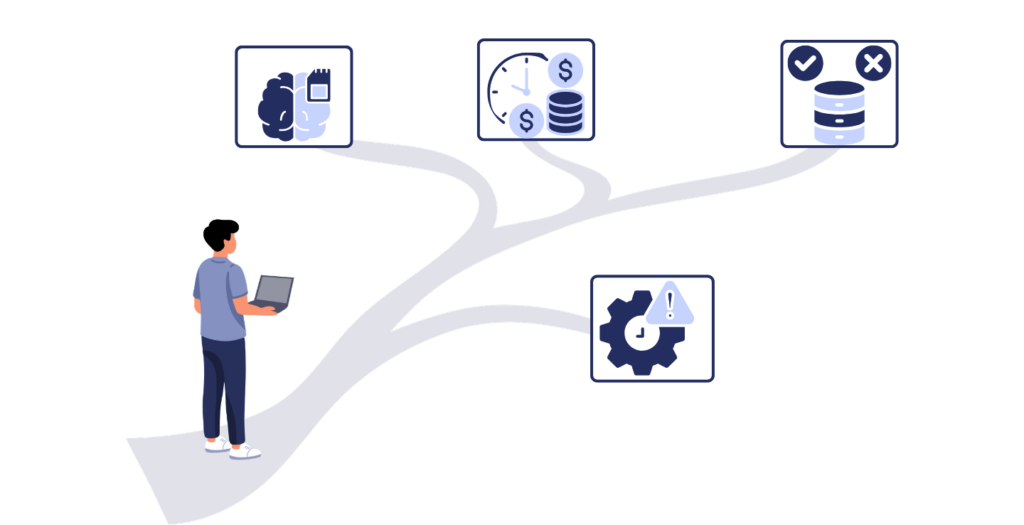
For example:
- Technicians relying on memory instead of records
- Managers working with incomplete data
- Delays caused by manual communication
By connecting systems, these gaps are eliminated.
How Invoqat Supports Integrated Operations
Invoqat offers a practical approach to integration.
Their platform helps businesses:
- Manage service requests efficiently
- Maintain accurate asset records
- Improve team coordination
- Ensure consistent service delivery
Importantly, the system integrates with existing workflows instead of replacing them.
Business Outcomes of Integration
| Outcome | Result |
|---|---|
| Operational Clarity | Better decisions |
| Cost Control | Reduced expenses |
| Asset Performance | Extended lifespan |
| Customer Experience | Reliable service |
| Team Coordination | Improved workflows |
Key Considerations Before Implementation
Although integration offers many benefits, it requires planning.
Businesses should consider:
- Gradual implementation approach
- System compatibility
- Staff training
- Data accuracy
However, starting small often leads to faster success.
Conclusion: A Smarter Way to Manage Service Operations
Service companies rarely struggle due to lack of skill. Instead, challenges arise from disconnected systems.
By adopting integrated field service and asset management, businesses can:
- Improve operational clarity
- Reduce inefficiencies
- Enhance customer satisfaction
Solutions like Invoqat support this transition in a practical and manageable way.
Ultimately, integration is not about doing more work. It is about doing the same work more efficiently with better information and fewer obstacles.
Frequently Asked Questions
It connects service operations with asset data in one system, ensuring all information is accessible in real time.
No. Most businesses implement it gradually, starting with key processes.
It helps improve efficiency, reduce costs, and meet growing service expectations.
Technicians receive complete job and asset information, allowing them to work faster and more accurately.
Yes. Smaller teams often see faster improvements because processes are simpler to optimize.
