
Introduction
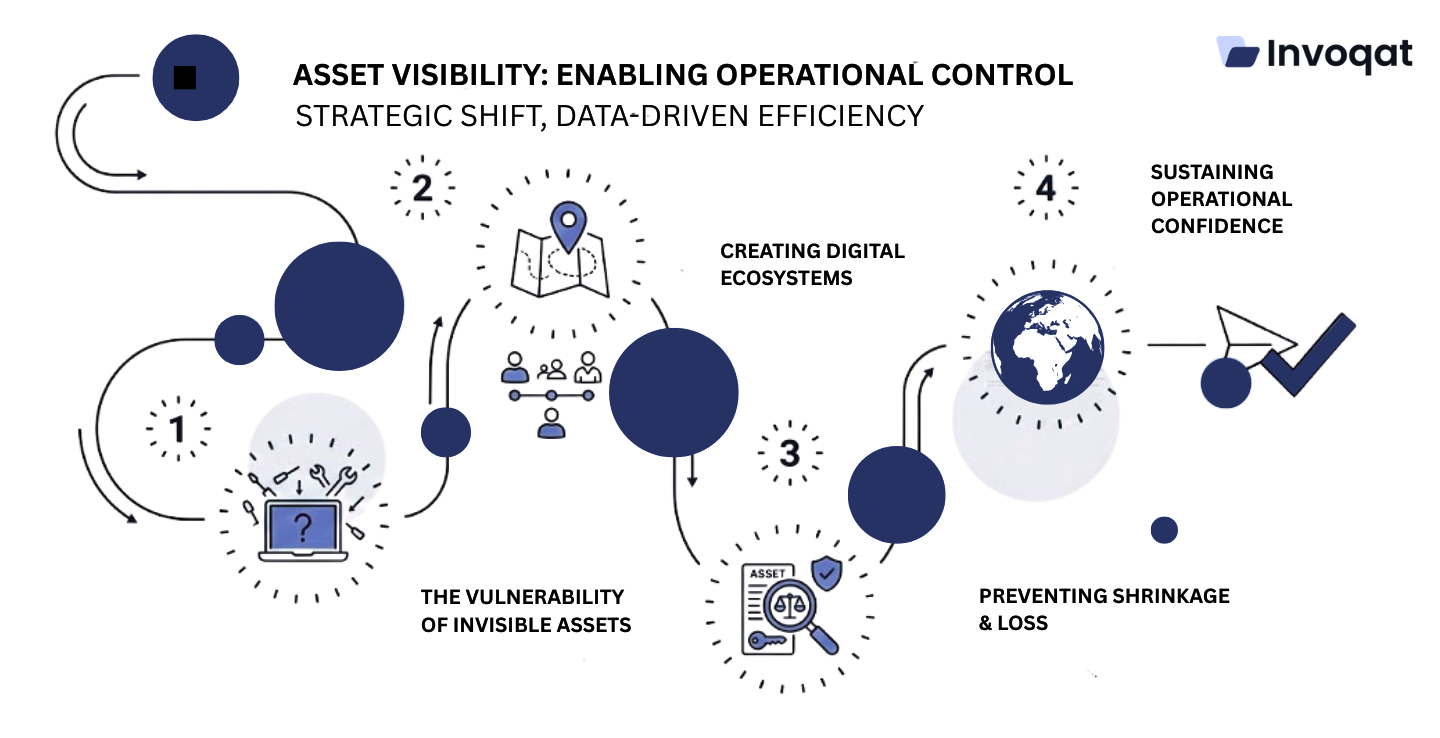
Many organizations do not realize how fragile their asset management systems are until something important disappears. A laptop cannot be located in the IT department, a maintenance tool goes missing during an urgent repair, or equipment appears in the inventory report but not in the physical workspace.
At first, these incidents seem small. However, when they occur repeatedly across departments, the financial and operational impact becomes significant.
This is why many leaders are now asking an important question: how can digital visibility prevent asset loss, misplacement, and shrinkage in environments where assets move constantly?
In large organizations such as hospitals, warehouses, manufacturing plants, or construction sites thousands of assets circulate daily between departments, storage locations, and job sites. When companies rely on spreadsheets, handwritten records, or employee memory to track these movements, errors eventually occur.
Digital visibility changes this situation. Instead of guessing where equipment might be, organizations gain real-time insight into what assets exist, where they are located, and how they are being used.
Companies such as Invoqat help organizations build asset tracking environments where transparency replaces uncertainty. Through digital asset management systems, businesses gain the operational clarity needed to protect equipment, reduce financial losses, and improve decision-making.
Understanding Asset Shrinkage
Asset shrinkage refers to the reduction in available assets due to:
- Loss
- Misplacement
- Theft
- Administrative errors
Although shrinkage may appear minor initially, its cumulative impact can be substantial.
The Financial Impact of Asset Shrinkage
| Category | Typical Impact | Example |
|---|---|---|
| Equipment replacement | Direct cost increase | Purchasing duplicate tools |
| Operational delays | Productivity loss | Maintenance teams waiting for equipment |
| Compliance issues | Regulatory risk | Missing inspection devices |
| Inventory inaccuracies | Budget misallocation | Ordering unnecessary replacements |
Consider a manufacturing company managing 4,000 tools and equipment items. If only 5% become misplaced annually, the organization may need to replace or recover 200 items each year.
Depending on asset value, that could translate into hundreds of thousands of dollars in avoidable expenses.
Why Asset Loss and Misplacement Occur
Asset loss rarely happens because employees intentionally misuse equipment. In most cases, it results from poor visibility and inconsistent tracking processes.
Common causes include:
- Lack of real-time asset location tracking
- Reliance on spreadsheets or manual records
- Weak accountability across departments
- Infrequent inventory audits
- Absence of centralized asset management systems
When organizations lack visibility into asset movement, they gradually develop what could be called operational blindness.
The Hidden Problem: Invisible Assets
Many assets that appear “lost” are not actually missing.
They are simply misplaced.
For example, in a hospital environment, portable diagnostic equipment might move between wards, emergency rooms, and diagnostic units multiple times a day. If that movement is not recorded digitally, staff may believe the device is missing even though it is sitting in another department.
Multiply that confusion across hundreds of assets and the organization quickly loses track of its resources.
How Digital Visibility Prevents Asset Loss, Misplacement, and Shrinkage
Digital asset visibility introduces several capabilities that eliminate uncertainty.
These include:
- Real-time location tracking
- Centralized asset databases
- Automated check-in and check-out processes
- Detailed usage history
- Predictive maintenance monitoring
Together, these features transform asset management from guesswork into a data-driven process.
Real-Time Location Awareness
Digital asset visibility typically relies on technologies such as:
- RFID tags
- QR codes
- GPS trackers
- IoT sensors
Each asset receives a unique digital identifier. As equipment moves, the system records its location and status automatically.
Instead of asking, “Where did we leave that generator?” managers can simply open a dashboard and view the asset’s location instantly.
Although the concept seems simple, this visibility dramatically improves operational control.
Centralized Asset Information
Digital visibility also creates a centralized asset database containing key information for every tracked item.
Typical records include:
- Asset identification numbers
- Purchase history
- Maintenance records
- Assigned department
- Current location
- Responsible employee
Centralized data eliminates fragmented information stored across departments and improves accountability.
Digital Asset Tracking Technologies
| Technology | Function | Typical Use Case |
|---|---|---|
| RFID Tags | Automatic asset identification | Warehouses and logistics |
| QR Codes | Manual scanning for tracking | IT equipment and tools |
| GPS Tracking | Real-time location monitoring | Fleet management |
| IoT Sensors | Continuous asset monitoring | Industrial equipment |
These technologies often integrate with enterprise asset management systems to create a comprehensive tracking ecosystem.
Cultural Changes Created by Digital Visibility
Technology alone does not solve asset management challenges. Organizational behaviour must evolve alongside new systems.
Once employees understand that assets are digitally tracked, several behavioral changes naturally occur:
- Borrowed tools are returned promptly
- Equipment transfers between departments are documented
- Maintenance teams log usage more consistently
Over time, this increased awareness creates a culture of responsibility around shared resources.
A Key Question for Every Organisation
When discussing digital visibility, leaders should ask themselves a simple but revealing question:
If your organization conducted an asset audit tomorrow, how quickly could employees locate every item?
Would it take:
- Ten minutes
- Several hours
- Multiple days
Many organizations believe their records are accurate until they attempt a real-time verification exercise. Suddenly teams begin searching cabinets, calling colleagues, and checking storage rooms for equipment that the system claims should already be visible.
Digital visibility eliminates this gap between records and reality.
Improving Maintenance and Asset Lifespan
Asset visibility does more than prevent loss. It also improves equipment reliability and lifespan.
Maintenance Benefits of Digital Asset Tracking
| Maintenance Factor | Without Digital Tracking | With Digital Visibility |
|---|---|---|
| Maintenance schedules | Often delayed | Automated reminders |
| Equipment history | Fragmented records | Centralized logs |
| Downtime analysis | Limited insight | Detailed performance data |
| Lifecycle planning | Estimated guesses | Data-driven forecasting |
These insights enable organizations to perform proactive maintenance, reducing breakdowns and extending asset life.
Preventing Theft Through Transparency
Although most shrinkage results from misplacement, theft can occasionally occur.
Digital visibility discourages theft because assets are traceable.
When equipment is assigned to specific users and movement is logged automatically, accountability increases significantly.
In many organizations, asset losses drop quickly once digital tracking systems are introduced—not because the assets changed, but because transparency changed behavior.
Integration with Enterprise Systems
Modern asset visibility platforms often integrate with broader enterprise systems, including:
- Enterprise Resource Planning (ERP) platforms
- Maintenance management systems
- Procurement systems
- Compliance reporting tools
For example, when a new piece of equipment is purchased, it automatically appears in the digital asset database and becomes visible to operations, maintenance, and finance teams simultaneously.
This integration improves coordination across departments.
The Role of Data in Preventing Shrinkage
Data plays a critical role in identifying operational patterns.
Once organizations collect asset movement and usage data, they can analyze trends such as:
- Departments that frequently misplace equipment
- Under-utilized assets
- Locations with repeated inventory discrepancies
These insights allow leadership teams to correct operational inefficiencies before they become costly problems.
Conclusion
Understanding how digital visibility prevents asset loss, misplacement, and shrinkage requires looking beyond technology and focusing on operational transparency.
When organizations clearly understand:
- What assets they own
- Where those assets are located
- Who is responsible for them
- How they are being used
asset management becomes far more reliable.
Maintenance teams spend less time searching for equipment, financial planning improves because inventory data reflects reality, and operational confidence increases across departments.
Companies such as Invoqat help organizations implement digital visibility frameworks that transform asset environments into structured, transparent systems. Their work demonstrates that asset tracking is not just a technical improvement it is a strategic shift toward accountability and operational clarity.
When digital visibility becomes part of the organization’s operational foundation, asset loss and shrinkage stop being routine problems and become rare exceptions.
Frequently Asked Questions
Digital asset visibility refers to the ability to track and monitor assets in real time using technologies such as RFID tags, QR codes, GPS tracking, and centralized asset management platforms.
By recording asset location, usage history, and ownership in real time, organizations can quickly locate equipment and prevent misplacement or theft.
Industries with large asset inventories such as healthcare, manufacturing, logistics, construction, and utilities benefit significantly from digital visibility systems.
Not always. In many cases, shrinkage occurs because assets are misplaced or poorly tracked rather than stolen.
Invoqat helps organizations implement asset digitisation and tracking systems that create real-time visibility, improve asset accountability, and reduce operational losses caused by misplacement or shrinkage.
